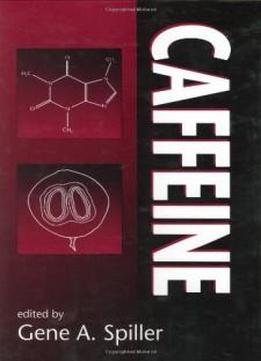
Caffeine
by Gene A. Spiller /
1997 / English / PDF
8.6 MB Download
Caffeine-found in tea, coffee, maté, cola beverages, cocoa, and
chocolate products-is an integral part of the diet of many people.
Caffeine answers questions for a broad range of readers interested
in the effects beverages and foods containing this dietary
methylxanthine have on human health, nutrition, and physiological
functioning. The composition, processing, consumption, health
effects, and epidemiological correlations of caffeine are examined
in detail. It is often said that too much caffeine is "bad for
you." How much is too much? Get the facts on consumption of
caffeine-containing products with this authoritative text.
Caffeine-found in tea, coffee, maté, cola beverages, cocoa, and
chocolate products-is an integral part of the diet of many people.
Caffeine answers questions for a broad range of readers interested
in the effects beverages and foods containing this dietary
methylxanthine have on human health, nutrition, and physiological
functioning. The composition, processing, consumption, health
effects, and epidemiological correlations of caffeine are examined
in detail. It is often said that too much caffeine is "bad for
you." How much is too much? Get the facts on consumption of
caffeine-containing products with this authoritative text.
Chapters 1 and 2 offer an introductory, concise overview of the
chemistry and analysis of methylxanthines. In Chapters 3 through 8,
each natural product-tea, coffee, maté, and cocoa and chocolate
products-is described in terms of botany, cultivation, processing,
composition, and consumption patterns. Consumption of caffeine is
also examined in detail in Chapter 9. Chapter 10 provides an
easy-to-read overview of the basic physiology and biochemistry of
caffeine. The ergogenic, cognitive, and emotional effects of
caffeine are discussed in Chapters 11 and 12. Chapters 13 through
16 deal with specific health effects-serum cholesterol, cancer and
fibrocystic breast disease, calcium and bone health, and human
reproduction.
Chapters 1 and 2 offer an introductory, concise overview of the
chemistry and analysis of methylxanthines. In Chapters 3 through 8,
each natural product-tea, coffee, maté, and cocoa and chocolate
products-is described in terms of botany, cultivation, processing,
composition, and consumption patterns. Consumption of caffeine is
also examined in detail in Chapter 9. Chapter 10 provides an
easy-to-read overview of the basic physiology and biochemistry of
caffeine. The ergogenic, cognitive, and emotional effects of
caffeine are discussed in Chapters 11 and 12. Chapters 13 through
16 deal with specific health effects-serum cholesterol, cancer and
fibrocystic breast disease, calcium and bone health, and human
reproduction.
For physicians, nutritionists, other health professionals, food
scientists, and everyone interested in the effects of caffeine on
the human body, Caffeine is a convenient, single-source reference.
For physicians, nutritionists, other health professionals, food
scientists, and everyone interested in the effects of caffeine on
the human body, Caffeine is a convenient, single-source reference.





![German Grammar In Context (Languages In Context) (English And German Edition) [English, German]](/media/uploads/2020/5/german-grammar-in-context-languages-in-context-english-and-german-edition-english-german.jpg.147x205_q85.jpg)