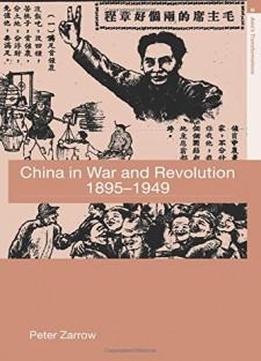
China In War And Revolution, 1895-1949 (asia's Transformations)
by Peter Zarrow /
2005 / English / PDF
3.7 MB Download
Providing historical insights essential to the understanding of
contemporary China, this text presents a nation's story of trauma
and growth during the early twentieth century. It explains how
China's defeat by Japan in 1895 prompted an explosion of
radical reform proposals and the beginning of elite Chinese
disillusionment with the Qing government. The book explores
how this event also prompted five decades of efforts to strengthen
the state and the nation, democratize the political system, and
build a fairer and more unified society.
Providing historical insights essential to the understanding of
contemporary China, this text presents a nation's story of trauma
and growth during the early twentieth century. It explains how
China's defeat by Japan in 1895 prompted an explosion of
radical reform proposals and the beginning of elite Chinese
disillusionment with the Qing government. The book explores
how this event also prompted five decades of efforts to strengthen
the state and the nation, democratize the political system, and
build a fairer and more unified society.
Peter Zarrow weaves narrative together with thematic chapters that
pause to address in-depth themes central to China's transformation.
While the book proceeds chronologically, the chapters in each part
examine particular aspects of these decades in a more focused way,
borrowing from methodologies of the social sciences, cultural
studies, and empirical historicism. Essential reading for both
students and instructors alike, it draws a picture of the
personalities, ideas and processes by which a modern state was
created out of the violence and trauma of these decades.
Peter Zarrow weaves narrative together with thematic chapters that
pause to address in-depth themes central to China's transformation.
While the book proceeds chronologically, the chapters in each part
examine particular aspects of these decades in a more focused way,
borrowing from methodologies of the social sciences, cultural
studies, and empirical historicism. Essential reading for both
students and instructors alike, it draws a picture of the
personalities, ideas and processes by which a modern state was
created out of the violence and trauma of these decades.