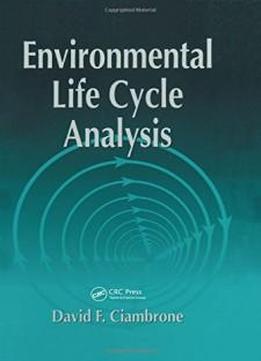
Environmental Life Cycle Analysis
by David F. Ciambrone /
1997 / English / PDF
15.3 MB Download
The trend in industry and with the EPA is to prevent wastes before
they are created instead of treating or disposing of them later.
This book assists design/systems engineers and managers in
designing or changing a product or set of processes in order to
minimize the negative impact on the environment during its life
cycle. It explains the overall concept of environmental life cycle
analysis and breaks down each of the stages, providing a clear
picture of the issues involved.
The trend in industry and with the EPA is to prevent wastes before
they are created instead of treating or disposing of them later.
This book assists design/systems engineers and managers in
designing or changing a product or set of processes in order to
minimize the negative impact on the environment during its life
cycle. It explains the overall concept of environmental life cycle
analysis and breaks down each of the stages, providing a clear
picture of the issues involved.
Chapters 1 and 2 provide an introduction and overview of the
environmental life cycle analysis process. Chapter 3 establishes
the basis and methodologies required for analysis through
description of the basic framework, definition of boundaries, use
of checklists, data gathering processes, construction of models,
and interpretation of results. Templates and special cases that may
be encountered and how to handle them are addressed in Chapter 4.
Chapters 5 through 9 go into detail about modeling, issues, and
data collection for each stage of the product life cycle. The final
chapter provides a summary of the various steps and offers ideas on
how to present data and reports.
Chapters 1 and 2 provide an introduction and overview of the
environmental life cycle analysis process. Chapter 3 establishes
the basis and methodologies required for analysis through
description of the basic framework, definition of boundaries, use
of checklists, data gathering processes, construction of models,
and interpretation of results. Templates and special cases that may
be encountered and how to handle them are addressed in Chapter 4.
Chapters 5 through 9 go into detail about modeling, issues, and
data collection for each stage of the product life cycle. The final
chapter provides a summary of the various steps and offers ideas on
how to present data and reports.