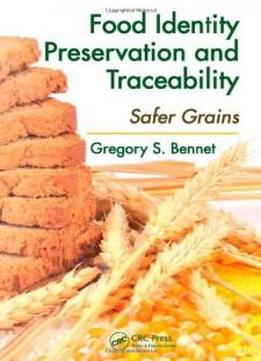
Food Identity Preservation And Traceability: Safer Grains
by Gregory S. Bennet /
2009 / English / PDF
12.5 MB Download
A Practical Roadmap to IPT Integration
A Practical Roadmap to IPT Integration
From baby formula and peanut butter, to
From baby formula and peanut butter, toE. coli-
E. coli-tainted
peppers and salmonella-tainted pistachios, no food product or
means of its production is immune to risks. And while these risks
may never be fully eliminated, identity preservation and
traceability (IPT) systems make it easier to determine the source
and extent of contamination, thereby reducing the often deadly
consequences.
tainted
peppers and salmonella-tainted pistachios, no food product or
means of its production is immune to risks. And while these risks
may never be fully eliminated, identity preservation and
traceability (IPT) systems make it easier to determine the source
and extent of contamination, thereby reducing the often deadly
consequences.
With a core emphasis on grain, this encyclopedic reference
documents the state-of-the-science throughout the entire food
chain in both domestic and international markets as it relates to
food safety and economics. The book provides a cohesive
introduction to IPT systems and summarizes the programs currently
available, in effect developing a conceptual model of IPT at the
producer level.
With a core emphasis on grain, this encyclopedic reference
documents the state-of-the-science throughout the entire food
chain in both domestic and international markets as it relates to
food safety and economics. The book provides a cohesive
introduction to IPT systems and summarizes the programs currently
available, in effect developing a conceptual model of IPT at the
producer level.Addresses the History, Theory, and Design
Components
Addresses the History, Theory, and Design
Components
Beginning with an informative history of IPT, the book continues
with examples of IPT programs and standards of official seed
organizations. It then provides a sampling of government,
industry, and company approaches toward IPT systems throughout
the past two decades. For ease of use as a reference, most
chapters begin with a brief description of the essentials
necessary to understand the chapter’s contents allowing readers
to jump right in, rather than having to read chapters in
sequential order.
Beginning with an informative history of IPT, the book continues
with examples of IPT programs and standards of official seed
organizations. It then provides a sampling of government,
industry, and company approaches toward IPT systems throughout
the past two decades. For ease of use as a reference, most
chapters begin with a brief description of the essentials
necessary to understand the chapter’s contents allowing readers
to jump right in, rather than having to read chapters in
sequential order.
Providing an in-depth understanding of the complexity of IPT
systems, the rules they function under, and how they are shaped
and modified, this valuable resource effectively demonstrates why
IPT is a critical practice for food safety.
Providing an in-depth understanding of the complexity of IPT
systems, the rules they function under, and how they are shaped
and modified, this valuable resource effectively demonstrates why
IPT is a critical practice for food safety.