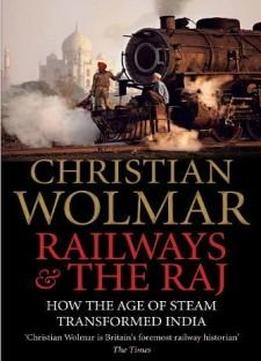
Railways And The Raj: How The Age Of Steam Transformed India
by Christian Wolmar /
2017 / English / EPUB
7.1 MB Download
India was the jewel in the crown of the British Empire. There were
vast riches to be exploited and vast numbers of people to be
subjugated. How better to achieve these aims than by building a
rail network that facilitated the export of raw material and made
it easier for troops to travel around the country to tackle
uprisings?India joined the railway age late: the first line was not
completed until 1853 but, by 1929, 41,000 miles of track served the
country. However, the creation of this vast network was not
intended to modernize India for the sake of its people but rather
was a means for the colonial power to govern the huge country under
its control, serving its British economic and military interests.
By building India's railways, Britain radically changed the nation
but also unwittingly created the preconditions of independence.
While the railways benefitted India and were its first modern
development, their construction ultimately contributed to a
stirring of nationalist opinion, as resentment grew among the
Indian population over the conditions they endured when travelling
by train and the barring of Indians from the better paid railway
jobs.Despite the dubious intentions behind the construction of the
network, the Indian people quickly took to the railways, as the
trains allowed them to travel easily for the first time. The Indian
Railways network remains one of the largest in the world, serving
over 25 million passengers each day.In this expertly told history,
Christian Wolmar reveals the full story of India's railways, from
its very beginnings to the present day, and examines the chequered
role they have played in Indian history and the creation of today's
modern state.
India was the jewel in the crown of the British Empire. There were
vast riches to be exploited and vast numbers of people to be
subjugated. How better to achieve these aims than by building a
rail network that facilitated the export of raw material and made
it easier for troops to travel around the country to tackle
uprisings?India joined the railway age late: the first line was not
completed until 1853 but, by 1929, 41,000 miles of track served the
country. However, the creation of this vast network was not
intended to modernize India for the sake of its people but rather
was a means for the colonial power to govern the huge country under
its control, serving its British economic and military interests.
By building India's railways, Britain radically changed the nation
but also unwittingly created the preconditions of independence.
While the railways benefitted India and were its first modern
development, their construction ultimately contributed to a
stirring of nationalist opinion, as resentment grew among the
Indian population over the conditions they endured when travelling
by train and the barring of Indians from the better paid railway
jobs.Despite the dubious intentions behind the construction of the
network, the Indian people quickly took to the railways, as the
trains allowed them to travel easily for the first time. The Indian
Railways network remains one of the largest in the world, serving
over 25 million passengers each day.In this expertly told history,
Christian Wolmar reveals the full story of India's railways, from
its very beginnings to the present day, and examines the chequered
role they have played in Indian history and the creation of today's
modern state.