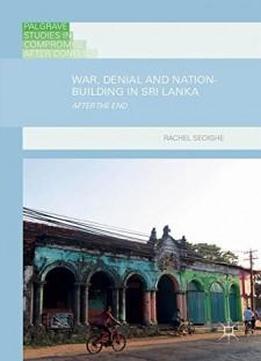
War, Denial And Nation-building In Sri Lanka: After The End (palgrave Studies In Compromise After Conflict)
by Rachel Seoighe /
2018 / English / PDF
4.7 MB Download
This book begins from a critical account of the final months of
the Sri Lankan civil war, tracing themes of nationalism,
discourse and conflict memory through this period of immense
violence and into its aftermath. Using these themes to explore
state crime, atrocity and its denial and representation, Seoighe
offers an analysis of how stories of conflict are authored and
constructed. This book examines the political discourse of the
former Rajapaksa government, highlighting how fluency in
international discourses of counter-terrorism, humanitarianism
and the ‘reconciliation’ expected of states transitioning from
conflict can be used to conceal and deny state violence.
This book begins from a critical account of the final months of
the Sri Lankan civil war, tracing themes of nationalism,
discourse and conflict memory through this period of immense
violence and into its aftermath. Using these themes to explore
state crime, atrocity and its denial and representation, Seoighe
offers an analysis of how stories of conflict are authored and
constructed. This book examines the political discourse of the
former Rajapaksa government, highlighting how fluency in
international discourses of counter-terrorism, humanitarianism
and the ‘reconciliation’ expected of states transitioning from
conflict can be used to conceal and deny state violence.
Drawing on extensive interviews with activists, academics,
politicians, state representatives and international agency
staff, and three months of observation in Sri Lanka in 2012,
Seoighe demonstrates how the Rajapaksa government re-narrativised
violence through orchestrated techniques of denial and mass
ritual discourse. It drew on and perpetuated a heightened
majoritarian Sinhala-Buddhist nationalism which consolidated
power under Sinhalese political elites, generated minority
grievances and, in turn, sustained the repression and
dispossession of the Tamil community of the Northeast. A detailed
and evocative study, this book will be of special interest to
scholars of conflict studies, political violence and critical
criminology.
Drawing on extensive interviews with activists, academics,
politicians, state representatives and international agency
staff, and three months of observation in Sri Lanka in 2012,
Seoighe demonstrates how the Rajapaksa government re-narrativised
violence through orchestrated techniques of denial and mass
ritual discourse. It drew on and perpetuated a heightened
majoritarian Sinhala-Buddhist nationalism which consolidated
power under Sinhalese political elites, generated minority
grievances and, in turn, sustained the repression and
dispossession of the Tamil community of the Northeast. A detailed
and evocative study, this book will be of special interest to
scholars of conflict studies, political violence and critical
criminology.