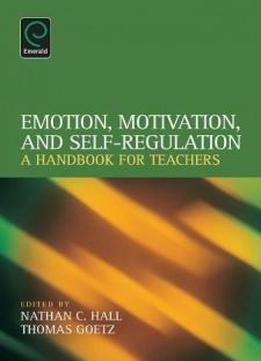
Emotion, Motivation, And Self-regulation: A Handbook For Teachers
by Nathan C. Hall /
2013 / English / PDF
16.7 MB Download
This handbook is a user-friendly resource for pre-service and new
practicing teachers outlining theoretical models and empirical
research findings concerning the nature and effects of emotions,
motivation, and self-regulated learning for students and teachers
alike. The authors provide accessible explanations, classroom-based
examples and self-reflection exercises, as well as useful advice
for new teachers about these psychosocial processes. They address
how to measure these processes, what effects they have on personal
and academic development, how they manifest in both students and
teachers and how teachers can best manage and optimize these
critical elements at the classroom level. It is expected that by
collecting, distilling, and highlighting the real-world
applicability of research on underexplored educational topics
(e.g., students' emotions other than anxiety, promoting student
autonomy, preventing burnout and attrition in teachers) that
empirical findings can be used to improve personal and academic
development in students, while also preparing new teachers for the
psychological challenges of classroom instruction.
This handbook is a user-friendly resource for pre-service and new
practicing teachers outlining theoretical models and empirical
research findings concerning the nature and effects of emotions,
motivation, and self-regulated learning for students and teachers
alike. The authors provide accessible explanations, classroom-based
examples and self-reflection exercises, as well as useful advice
for new teachers about these psychosocial processes. They address
how to measure these processes, what effects they have on personal
and academic development, how they manifest in both students and
teachers and how teachers can best manage and optimize these
critical elements at the classroom level. It is expected that by
collecting, distilling, and highlighting the real-world
applicability of research on underexplored educational topics
(e.g., students' emotions other than anxiety, promoting student
autonomy, preventing burnout and attrition in teachers) that
empirical findings can be used to improve personal and academic
development in students, while also preparing new teachers for the
psychological challenges of classroom instruction.