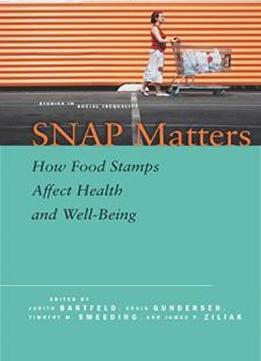
Snap Matters: How Food Stamps Affect Health And Well-being (studies In Social Inequality)
by James P. Ziliak /
2015 / English / PDF
14 MB Download
In 1963, President Kennedy proposed making permanent a small pilot
project called the Food Stamp Program (FSP). By 2013, the program's
fiftieth year, more than one in seven Americans received benefits
at a cost of nearly $80 billion. Renamed the Supplemental Nutrition
Assistance Program (SNAP) in 2008, it currently faces sharp
political pressure, but the social science research necessary to
guide policy is still nascent. In
In 1963, President Kennedy proposed making permanent a small pilot
project called the Food Stamp Program (FSP). By 2013, the program's
fiftieth year, more than one in seven Americans received benefits
at a cost of nearly $80 billion. Renamed the Supplemental Nutrition
Assistance Program (SNAP) in 2008, it currently faces sharp
political pressure, but the social science research necessary to
guide policy is still nascent. InSNAP Matters
SNAP Matters, Judith
Bartfeld, Craig Gundersen, Timothy M. Smeeding, and James P. Ziliak
bring together top scholars to begin asking and answering the
questions that matter. For example, what are the antipoverty
effects of SNAP? Does SNAP cause obesity? Or does it improve
nutrition and health more broadly? To what extent does SNAP work in
tandem with other programs, such as school breakfast and lunch?
Overall, the volume concludes that SNAP is highly responsive to
macroeconomic pressures and is one of the most effective
antipoverty programs in the safety net, but the volume also
encourages policymakers, students, and researchers to continue
examining this major pillar of social assistance in America.
, Judith
Bartfeld, Craig Gundersen, Timothy M. Smeeding, and James P. Ziliak
bring together top scholars to begin asking and answering the
questions that matter. For example, what are the antipoverty
effects of SNAP? Does SNAP cause obesity? Or does it improve
nutrition and health more broadly? To what extent does SNAP work in
tandem with other programs, such as school breakfast and lunch?
Overall, the volume concludes that SNAP is highly responsive to
macroeconomic pressures and is one of the most effective
antipoverty programs in the safety net, but the volume also
encourages policymakers, students, and researchers to continue
examining this major pillar of social assistance in America.