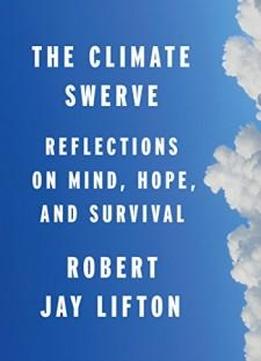
The Climate Swerve: Reflections On Mind, Hope, And Survival
by Robert Jay Lifton /
2017 / English / EPUB
589.8 KB Download
Over his long career as witness to an extreme twentieth
century, National Book Award–winning psychiatrist, historian,
and public intellectual Robert Jay Lifton has grappled with the
profound effects of nuclear war, terrorism, and genocide. Now
he shifts to climate change, which, Lifton writes, "presents us
with what may be the most demanding and unique psychological
task ever required of humankind," what he describes as the task
of mobilizing our imaginative resources toward climate sanity.
Over his long career as witness to an extreme twentieth
century, National Book Award–winning psychiatrist, historian,
and public intellectual Robert Jay Lifton has grappled with the
profound effects of nuclear war, terrorism, and genocide. Now
he shifts to climate change, which, Lifton writes, "presents us
with what may be the most demanding and unique psychological
task ever required of humankind," what he describes as the task
of mobilizing our imaginative resources toward climate sanity.
Thanks to the power of corporate-funded climate denialists and
the fact that "with its slower, incremental sequence, [climate
change] lends itself less to the apocalyptic drama," a large
swathe of humanity has numbed themselves to the reality of
climate change. Yet Lifton draws a message of hope from the
Paris climate meeting of 2015 where representatives of
virtually all nations joined in the recognition that we are a
single species in deep trouble.
Thanks to the power of corporate-funded climate denialists and
the fact that "with its slower, incremental sequence, [climate
change] lends itself less to the apocalyptic drama," a large
swathe of humanity has numbed themselves to the reality of
climate change. Yet Lifton draws a message of hope from the
Paris climate meeting of 2015 where representatives of
virtually all nations joined in the recognition that we are a
single species in deep trouble.
Here, Lifton suggests in this lucid and moving book that
recalls Rachel Carson and Jonathan Schell, was evidence of how
we might call upon the human mind―"our greatest evolutionary
asset"―to translate a growing species awareness―or "climate
swerve"―into action to sustain our habitat and civilization.
Here, Lifton suggests in this lucid and moving book that
recalls Rachel Carson and Jonathan Schell, was evidence of how
we might call upon the human mind―"our greatest evolutionary
asset"―to translate a growing species awareness―or "climate
swerve"―into action to sustain our habitat and civilization.