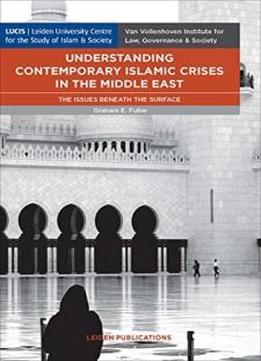
Understanding Contemporary Islamic Crises In The Middle East: The Issues Beneath The Surface
by Graham E. Fuller /
2017 / English / PDF
1.3 MB Download
During the past decade in the Middle East, widespread war and
violence, the collapse of numerous regimes, and the emergence of
ISIS have caused profound geopolitical shifts. This book
addresses these changes and how they may shape the future of this
tumultuous region.
During the past decade in the Middle East, widespread war and
violence, the collapse of numerous regimes, and the emergence of
ISIS have caused profound geopolitical shifts. This book
addresses these changes and how they may shape the future of this
tumultuous region.
First, Graham E. Fuller focuses on Shari’a law and its
appropriate role, if any, in the politics and governance of the
Muslim world, thereby further exploring why identity may be the
most important factor in examining politics in the Middle East
today. He also addresses the current Shi’ite-Sunni conflict,
going beyond theological approaches found in most Western
analysis to better understand the many more extra-religious
factors also at work. Perhaps most importantly, this book claims
that the appearance of ISIS has stretched the perennial
phenomenon of political Islam to the extreme. Fuller concludes by
asking what ISIS implies for the future of the Middle East and
for Muslims’ understanding of Islam itself.
First, Graham E. Fuller focuses on Shari’a law and its
appropriate role, if any, in the politics and governance of the
Muslim world, thereby further exploring why identity may be the
most important factor in examining politics in the Middle East
today. He also addresses the current Shi’ite-Sunni conflict,
going beyond theological approaches found in most Western
analysis to better understand the many more extra-religious
factors also at work. Perhaps most importantly, this book claims
that the appearance of ISIS has stretched the perennial
phenomenon of political Islam to the extreme. Fuller concludes by
asking what ISIS implies for the future of the Middle East and
for Muslims’ understanding of Islam itself.