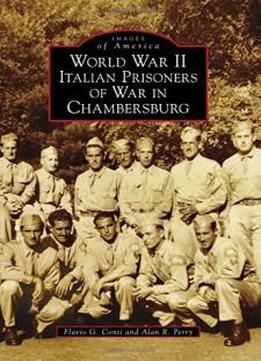
World War Ii Italian Prisoners Of War In Chambersburg (images Of America)
by Alan R. Perry /
2017 / English / EPUB
22.7 MB Download
During World War II, the US government interned more than 1,200
captured Italian soldiers at the Letterkenny Army Ordnance Depot
located near Chambersburg, Pennsylvania. These troops collaborated
with the United States in a collective effort to defeat the Axis
powers. They formed the 321st Italian Quartermaster Battalion, and
their work consisted mainly of stocking and shipping
materials--ammunition, military vehicles, weapons, and machinery
parts--to the war fronts in the European and Pacific theaters of
operation. For entertainment, the soldiers formed an orchestra and
band and for sport, several different company soccer teams. As a
sign of their faith, they built a chapel and bell tower, which are
still used today. Many POWs forged deep friendships with Americans,
and after the war, a few married their sweethearts and returned to
live in the United States. Today, warm relations still continue
between children and grandchildren of the POWs and the wider
Chambersburg community.
During World War II, the US government interned more than 1,200
captured Italian soldiers at the Letterkenny Army Ordnance Depot
located near Chambersburg, Pennsylvania. These troops collaborated
with the United States in a collective effort to defeat the Axis
powers. They formed the 321st Italian Quartermaster Battalion, and
their work consisted mainly of stocking and shipping
materials--ammunition, military vehicles, weapons, and machinery
parts--to the war fronts in the European and Pacific theaters of
operation. For entertainment, the soldiers formed an orchestra and
band and for sport, several different company soccer teams. As a
sign of their faith, they built a chapel and bell tower, which are
still used today. Many POWs forged deep friendships with Americans,
and after the war, a few married their sweethearts and returned to
live in the United States. Today, warm relations still continue
between children and grandchildren of the POWs and the wider
Chambersburg community.